

RSV Nasal Drops Tested Using a New Research Model
With support from Longfonds, Natalie Mazur investigated the effectiveness of nasal drops against respiratory syncytial virus (RSV) using a new research model. This allowed her to achieve two goals: gaining insight into how the treatment works and developing a faster, more cost-effective way to test vaccines.
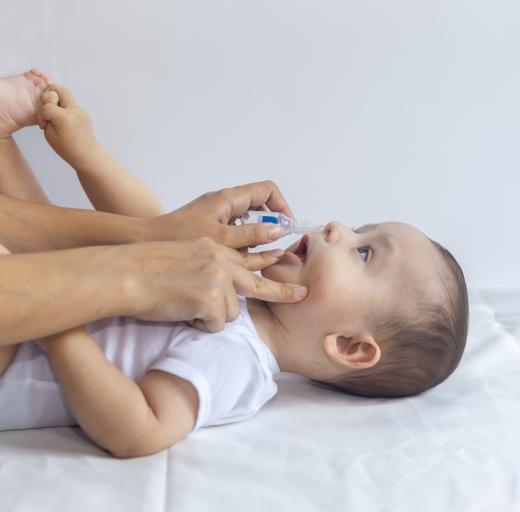
Nasal Drops
‘Over the past few years, we have worked hard to develop a new way of administering an existing, expensive vaccine against respiratory syncytial virus (RSV),’ says Natalie Mazur, physician-researcher at Wilhelmina Children's Hospital. ‘Instead of administering it by injection, we developed it as nasal drops. We chose this approach because nasal drops are more child-friendly and much more affordable.’ The researchers believed that the treatment would be more effective when administered this way, as RSV enters the body through the nose. ‘You can compare it to a bouncer at the entrance of a nightclub, keeping unwanted guests out. The nose is the ideal place to stop the virus before it enters the body.’
New Research Method
The nasal drops were tested using a controlled human infection model. ‘This is the first time in the world that this type of research has been conducted. Although it presents ethical and practical challenges, it offers significant advantages,’ explains Natalie Mazur. ‘Normally, a phase III clinical trial requires substantial time and funding, often taking several years. With this model, you can determine whether a vaccine is effective within just a few weeks or months. It also requires fewer participants, and everyone is exposed to the virus at the same time and with the same dose.’ This ensures that all participants become infected and allows researchers to better understand why a treatment does or does not work. The fact that this research model is now available in the Netherlands, thanks to this study, represents a major step forward.

‘We can follow the entire course of the disease, from beginning to end. This helps us develop better treatments.’
Strict Safety Measures
The researchers developed the model step by step. The study was conducted in adults rather than children, as it would have been too dangerous for children to participate. Adults usually experience only mild cold-like symptoms when infected with RSV. Mazur explains: ‘Twenty-eight participants were infected with the virus in hospital and then went into quarantine at home. We visited them every day, always at the same time and following strict safety measures. It was complicated, but less demanding for the participants.’ Research involving humans also provides more reliable information than animal studies. ‘Now that we have demonstrated that this can be done safely, other researchers around the world have adopted this model.’
Ruling Out Ineffective Treatments
Unfortunately, the nasal drops themselves did not prove effective enough. The researchers believe this is because they do not remain in the nose long enough. ‘The nose is a dynamic environment, and antibodies are quickly cleared away,’ explains Natalie Mazur. ‘The same happens with the nasal drops. That is very disappointing, as we had hoped they would provide an affordable and child-friendly way to prevent RSV infections, particularly in developing countries. However, in science, finding out quickly that something does not work is also valuable, as it allows you to move on to other solutions.’
Next Steps
Nevertheless, the study has achieved a great deal. ‘Together with Meta Roestenberg from Leiden University Medical Center (LUMC), who led the initiative, we received a €9.5 million grant from ZonMw. This funding will allow us to establish a central facility in the Netherlands dedicated to these types of studies, bringing all the expertise together in one place.’ The model also provides valuable insights into the immune system. ‘We can follow the entire course of the disease, from beginning to end. This helps us develop better treatments and identify biomarkers that can distinguish between viral and bacterial infections. For example, this can help determine when antibiotics are needed, which is particularly important given the growing problem of antibiotic resistance,’ says Natalie Mazur. Unfortunately, the nasal drops have not proven effective against RSV. However, the fact that the controlled human infection model can now be used represents a major advancement for scientific research.
Text: Judith Langeland