


Getting immune cells in the lungs back to work
In COPD, the lungs’ clean-up system does not work as well as it should. As a result, lung damage can continue. Dr Sjors Maassen is investigating how to help immune cells restore their ability to clear away harmful material. This could help slow down lung damage and potentially even stop it.
In healthy lungs, immune cells clear away harmful particles, pathogens and dead cells. These immune cells are called macrophages. In people with COPD, this clean-up process is less effective. As a result, damage continues to occur and the lungs are less able to repair themselves. Researcher Sjors Maassen from the University Medical Center Groningen aims to restore this clean-up system. He is investigating how the metabolism of macrophages can be ‘fine-tuned’ so that they can do their job more effectively. To do this, he is testing both new and existing medicines. ‘If existing medicines prove effective for COPD, we can save a great deal of time.’
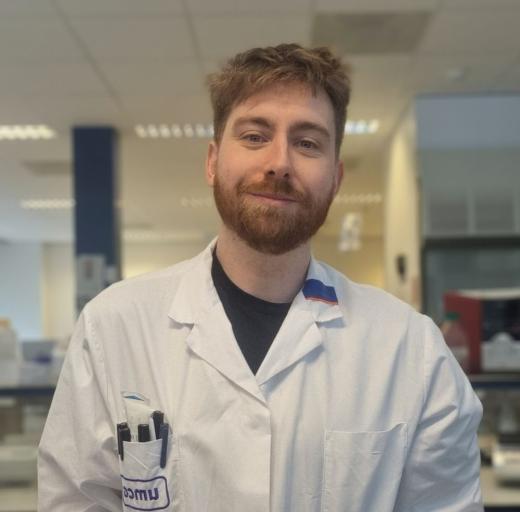
‘What makes this research particularly valuable is that we work with human cells. This means we don’t need to use laboratory animals.’
New treatment
‘Using special techniques, I measure how effectively immune cells in people with COPD clear away waste,’ Maassen explains. ‘In the laboratory, I link these findings to lung function and the severity of the disease. This allows me to see which medicines work and which do not.’ The aim is to develop a new treatment strategy that not only prevents symptoms, but may also be able to stop lung damage caused by COPD.
Mini-lungs in the lab
In the laboratory, Maassen uses lung cells to create tiny ‘mini-lungs’ in a culture dish. ‘I add macrophages from people with COPD and a pathogen to the mini-lungs. This triggers inflammation,’ he explains. ‘As a result, some of the cells lining the airways die.’
After the inflammation, macrophages clear away these dead cells. They also release signals that help the tissue repair itself. Maassen is testing whether existing and new medicines that affect metabolism can help the macrophages perform these tasks more effectively. To identify any differences, he carries out the same experiments using cells from people without COPD.
Taking a closer look at the cells
By examining the cells in the mini-lungs, Maassen can see exactly how much material the macrophages have cleared away. He can use this information in several ways:
- Compare mini-lungs with and without treatment. If the macrophages clear away more material after treatment, are the mini-lungs healthier as a result?
- Determine which existing or new medicine is most effective at stimulating macrophages to clear away waste.
- Investigate the characteristics of macrophages in COPD and how these relate to the disease. To do this, he uses lung cells from healthy people and people with COPD. For example, are certain characteristics more common in people with poorer lung function?
Unique insights
According to Maassen, the results provide unique insights. ‘For example, how does the surrounding tissue respond when the metabolism of immune cells is improved? Which medicines that have already been approved are effective for COPD? And can they also stimulate lung tissue to repair itself? What makes this research particularly valuable is that we work with human cells. This means we don’t need to use laboratory animals.’
Research without laboratory animals
Animal models are still used in around a quarter of the research projects supported by Longfonds. We are working to reduce their use as much as possible, while considerable efforts are being made to develop animal-free alternatives. That is why we also invest in lung research that does not require laboratory animals, such as Dr Sjors Maassen’s research. He received a €250,000 grant for his research, which focuses on detecting and treating COPD at an earlier stage.
Text: Judith Langeland