

Preventing antibiotic resistance
Professor Coen van Hasselt’s research is an important step towards preventing antibiotic resistance. This is good news for people who frequently develop pneumonia caused by the Pseudomonas bacterium.
“In our research, we focus on treating a common bacterium that often causes chronic lung infections: Pseudomonas aeruginosa,” says Coen van Hasselt, professor at Leiden University. In 2022, he received the Dirkje Postma Talent Award from Longfonds for this research.
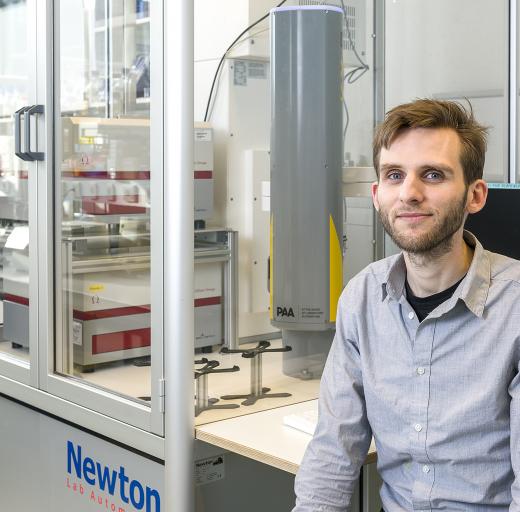
“In the next phase of the research, we hope to determine whether this combination truly offers added value for people with lung disease and a Pseudomonas infection.”
Computer simulations
Using computer simulations, the researchers discovered that a dosing regimen combining two antibiotics works better than treatment with a single antibiotic. The simulations also helped them understand how the antibiotic combination might behave in the human body. “Based on these results, an important next step is to investigate these dosing regimens further in clinical research—that is, research involving people,” says Coen van Hasselt.
Less antibiotic resistance
This is good news for people who regularly develop pneumonia caused by the Pseudomonas bacterium. For some of them, this new antibiotic combination could eventually provide more effective treatment while also reducing antibiotic resistance. The researchers then aim to apply this strategy to several other common bacterial pathogens. “For example, we are also applying the strategy to respiratory infections caused by streptococcal bacteria,” Van Hasselt explains.
Further research
“Our experiments and computer simulations confirm that this combination could improve the treatment of a Pseudomonas infection and help suppress the development of resistance,” says Van Hasselt. “In the next phase of the research, we hope to determine whether this combination truly offers added value for people with lung disease and a Pseudomonas infection. A clinical study like this is very expensive, so we hope to secure funding for it. The results of this completed project provide important evidence for why the treatment should now be investigated further in clinical trials.”